
That jelly though! 😍🤎
If you caught my latest Reel, you'll have seen me waving a spoonful of bone broth that had set so firmly it practically stood up on its own. A lot of you asked how I get it like that, so this is the full how-to: what I ask the butcher for, how I cook it, and how I know it's ready.
Watch the Reel: Homemade bone broth on Instagram
What to ask your butcher for
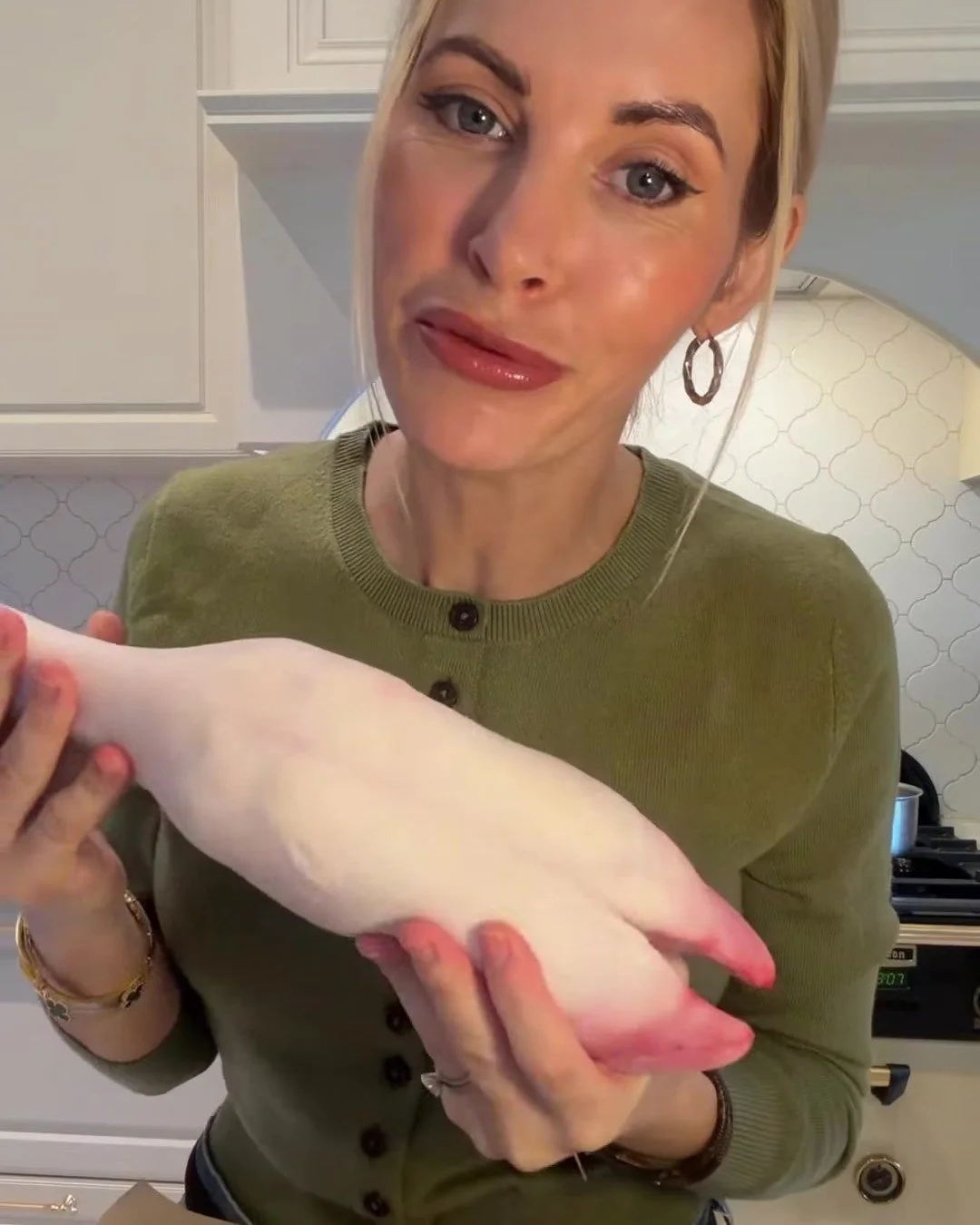
For this batch I used calf feet. I know, they're not the prettiest thing to pull out of a butcher's bag. But they're naturally rich in collagen and gelatine, and that's exactly what turns a pot of liquid into the gorgeous, wobbly jelly you see in the Reel.
They're one of those overlooked cuts that most people walk straight past. Ask your butcher for calf feet. They're usually inexpensive, and you get so much out of them.
Roast, then into the pot
The method is honestly very simple. I roast the calf feet for 40 minutes first, then pop them into a large pot or slow cooker with:
- a good splash of apple cider vinegar
- peppercorns and bay leaves
- sea salt
- onions and carrots
- celery and garlic, if you fancy
Cover the lot with water.
Low and slow: 8 to 12 hours
Then it's just a long, gentle simmer. Cook it low and slow for 8 to 12 hours. Mine had 10 hours: a pot quietly doing its thing all day.
If you're buying a slow cooker for this, the one I'd go for is the Crock-Pot 6.5L. (Affiliate link, so I may earn a small commission at no extra cost to you.) A large pot on the hob works just as well.
How to tell it's set
When the time is up, strain the broth, let it cool, and refrigerate it overnight.
The next morning, you should have the most gorgeous jelly-like broth. That moment when you tilt the container and it just wobbles? That's how you know it's set. So satisfying.
How I store it
Once it's set, I keep a little in the fridge and use it within two days, as the Food Standards Agency advises for leftovers, or I freeze it if I won't get through it in time. I freeze mine in portions for soups, sauces and everyday cooking. One pot goes a long way, and nothing gets wasted.
It's part of a little nose-to-tail thread I've been enjoying in my kitchen lately. If you missed it, my slow-cooker beef tongue with mash and onion gravy is here on the site: another traditional cut that turned out far more delicious than people expect.
Eat your skincare, the slow-kitchen way
This is what eating your skincare looks like for me: proper, traditional, whole-food cooking. Good ingredients, a bit of patience, and a batch that rewards you the next morning. No miracle claims, just the satisfaction of a broth that sets like jelly, made from a cut most people walk past.
Kitchen favourites and what's next
If you'd like to see the kitchen and wellness bits I actually use, they live on my shop page, and everything else I share is gathered on my links page.
I also write a free newsletter with the chattier version of these kitchen stories. You can subscribe at fernibops.substack.com.
Living down here has made me slower with food: good ingredients, traditional cuts, nothing fancy for the sake of it. I've also been working on something that brings more of this kind of cooking together, called Fernwell. It's coming soon, and I can't wait to tell you more.
Which "odd" cut should I try next? Tell me over on Instagram. I read every one. 👇
Lots of love from the South of France,
Fern x
Food and lifestyle writing, not medical advice.